
By Dr. Julian Reed & Maya Patel
Published in Deep Tech Futures
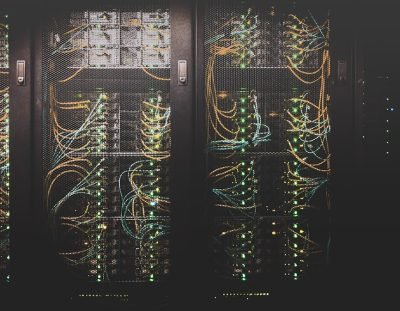
While classical supercomputers struggle with the exponential parameters of modern AI models, a new frontier is opening. Quantum Machine Learning (QML) promises to solve complex optimization problems in seconds that would take traditional computers millennia.

Superposition and Neural Networks
By Dr. Julian Reed
Quantum computers utilize qubits, which can exist in multiple states simultaneously (superposition). When applied to neural networks, this allows the system to evaluate vast multidimensional data landscapes all at once.
- Exponential Speedup: Rapid training of models that currently take months on GPU clusters.
- Complex Molecular Simulation: AI-driven drug discovery using exact quantum chemistry models.
- Advanced Pattern Recognition: Identifying hyper-dimensional correlations in financial and climate data.
Industry Readiness and QML Timelines
By Maya Patel
We are currently in the NISQ (Noisy Intermediate-Scale Quantum) era. While fault-tolerant quantum computers are still years away, hybrid algorithms are already delivering value.
| Timeline | Hardware State | AI Implication |
|---|---|---|
| Present (NISQ Era) | 50-400 Noisy Qubits | Hybrid quantum-classical optimization loops |
| Near-Term (2028+) | 1,000+ Physical Qubits | Quantum Support Vector Machines for enterprise data |
| Long-Term (2032+) | Fault-Tolerant Logical Qubits | Fully quantum neural networks disrupting cryptography |
Technical Deep Dive: Understanding Qubits in AI
By Dr. Julian Reed
Preparing the Enterprise for Q-Day
By Maya Patel
Forward-thinking organizations are already investing in quantum-safe cryptography to protect their current AI datasets from future quantum decryption. The convergence of AI and quantum computing will be the most significant technological leap of the century.