
For years, a $240 million regional industrial distributor had grown by instinct. Its category managers set prices from memory and habit, its planners reordered stock based on “what usually happens this time of year,” and its executive team made million-dollar calls in meetings without a shared set of numbers to argue over. The company was profitable, but growth was masking a widening gap between what leadership believed was happening in the business and what was actually happening on the floor, in the warehouse, and on the P&L.
Nova Capital Consulting was engaged to close that gap. What started as a request for “better reporting” became a nine-month data and decision-architecture transformation that changed how the company plans, prices, and prioritizes capital.
The client had scaled from a single warehouse to a five-region distribution network in under a decade, but its decision-making infrastructure hadn’t kept pace with its footprint. Pricing decisions lived in the heads of a handful of tenured category managers. Inventory targets were set from static spreadsheets last rebuilt during a prior ERP migration. Leadership reviewed performance monthly, using numbers that were frequently a full reporting cycle out of date by the time anyone acted on them.
None of this was unusual for a company at this stage of growth. But it meant every major call, from which SKUs to discontinue to how aggressively to price a large regional contract, was being made on partial information and personal confidence rather than evidence.
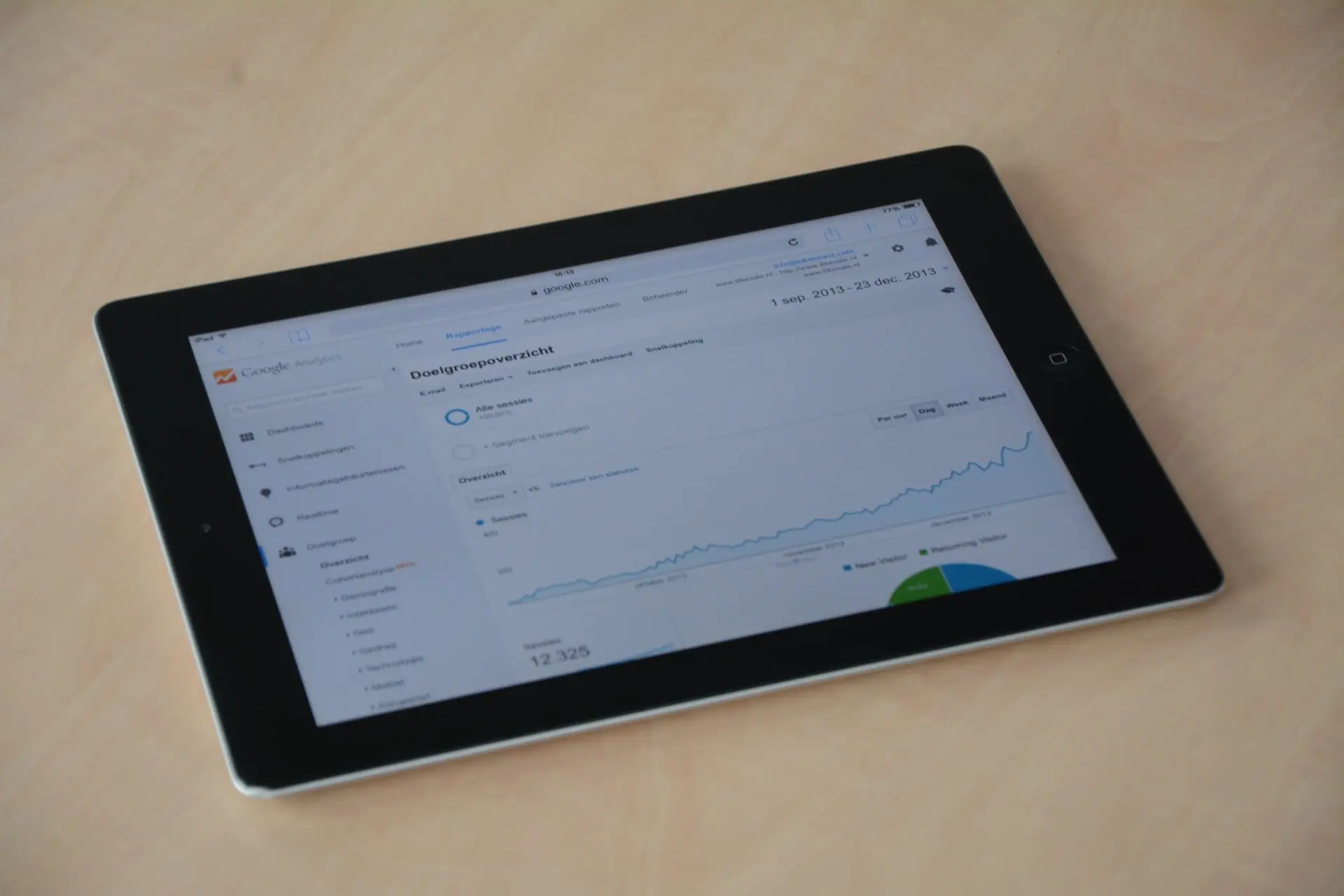
Leadership could move quickly, but speed wasn’t the problem. Confidence was. Roughly a third of pricing and inventory decisions reviewed during Nova Capital’s diagnostic were later reversed or quietly walked back within 60 days, typically because the numbers used to justify them didn’t hold up once finance, sales, and operations compared notes. This pattern tracks with broader industry findings: McKinsey’s research on the data-driven enterprise shows that organizations without unified, trusted data infrastructure consistently make slower and less durable decisions than those with a single source of operational truth, even when both move at the same apparent speed.
The company wasn’t short on data. It had four operational systems generating reports constantly. It was short on a shared, trusted version of what those reports meant.
Every department had its own spreadsheet and its own version of the truth. Sales trusted their numbers, operations trusted theirs, and finance trusted neither. Nobody was lying. They were just working from different realities, and every planning meeting turned into a debate about whose data was right instead of what to do next.
Data & Analytics Advisory

Nova Capital’s diagnostic phase mapped every data source feeding leadership decisions: the ERP, a legacy warehouse management system, a CRM used inconsistently across regions, and a web of manually maintained Excel trackers that had become, in practice, the company’s real system of record. Sales revenue, inventory-on-hand, and gross margin each had at least two conflicting figures depending on which system, and which employee’s spreadsheet, was consulted.
This fragmentation wasn’t a technology failure so much as a governance one. Nobody owned data quality end to end, so discrepancies accumulated silently until they surfaced in a budget review or a stockout that shouldn’t have happened.
Because there was no reliable forward-looking view of demand, planners over-ordered slow-moving SKUs to avoid stockouts and under-ordered fast-moving ones because last year’s numbers didn’t anticipate this year’s demand shift. As Harvard Business School research on data-driven decision-making points out, organizations often default to reactive, backward-looking data use precisely because they lack the infrastructure and discipline to build forward-looking models, not because leadership doesn’t value data.
Key improvements included:
The diagnostic made one thing clear: the company didn’t need more data. It had plenty. It needed a decision-making architecture that made the data trustworthy, timely, and actionable at the point where pricing, inventory, and capital decisions actually get made.
With the root causes mapped, Nova Capital moved from assessment to build: consolidating data sources, establishing ownership and governance, and designing decision workflows that gave every department the same numbers, in the same format, at the same time.
Nova Capital’s engagement team worked alongside the client’s finance, sales operations, and IT leads to design and deploy a governed analytics environment purpose-built around the three decisions that mattered most to the business: pricing, inventory allocation, and capital prioritization. The goal wasn’t a bigger dashboard. It was a smaller number of numbers everyone could act on with confidence.

The first phase focused on data infrastructure: integrating the ERP, warehouse management system, and CRM into a governed data warehouse with clear ownership rules for every core metric. Gartner has found that organizations with successful analytics and AI initiatives invest up to four times more in their data and analytics foundations than those whose initiatives stall, precisely because the underlying infrastructure determines whether every downstream decision can be trusted.
Nova Capital’s analytics team built a rolling demand-forecasting model using two years of historical sales data, seasonal patterns by region, and supplier lead-time variability, replacing the static annual spreadsheet planners had relied on. The model refreshed weekly instead of annually, giving inventory planners a forward-looking view instead of a backward-looking guess.

Rather than handing the client a generic business intelligence tool, Nova Capital designed three purpose-built decision workflows: a weekly pricing review anchored to real-time margin and elasticity data, a bi-weekly inventory allocation process driven by the new forecasting model, and a quarterly capital prioritization framework tied directly to unit economics by region. Each workflow had a single owner, a defined cadence, and one governed dataset behind it.
The turning point wasn't the technology. It was getting everyone to agree on one number for revenue, one number for margin, and one number for inventory turns, and then building the habits and meeting cadence around trusting those numbers instead of re-litigating them every time.
Business Intelligence & Analytics Practice
Infrastructure alone doesn’t change behavior. Nova Capital ran structured working sessions with category managers, regional operations leads, and the finance team to build fluency in the new dashboards and forecasting outputs, and to establish norms for when to trust a model versus when to escalate an anomaly. This investment in data literacy reflects a theme MIT Sloan Management Review has emphasized repeatedly: data culture, not just data infrastructure, is what ultimately determines whether an analytics investment changes how decisions actually get made.
Within two full quarters of the new decision infrastructure going live, the shift from instinct to evidence was visible in the numbers, not just in how meetings felt.

Average decision cycle time for pricing and inventory calls dropped from 19 days to 4.5 days, largely because teams no longer spent the first week of any decision reconciling conflicting numbers. Gartner’s 2026 predictions for data and analytics point specifically to decision velocity, not just data volume, as the defining advantage for organizations that have operationalized their analytics investments.
The new rolling demand-forecasting model improved forecast accuracy by 31 percent against the prior twelve-month baseline, measured across the company’s top 200 SKUs by revenue. That improvement translated directly into fewer emergency reorders, fewer markdowns on overstocked inventory, and a meaningfully leaner working capital position.

Pricing decision reversals fell from roughly one in three to fewer than one in twenty within two quarters. Category managers now set prices using live margin and elasticity data rather than supplier cost triggers alone, which also allowed the company to identify and correct several underpriced product lines that had been quietly eroding margin for years.
Combining more accurate demand forecasting with disciplined, data-backed pricing produced an estimated $4.6 million in incremental annual margin: roughly $2.9 million from reduced carrying costs and markdown avoidance, and $1.7 million from corrected pricing on underpriced high-volume SKUs.
The most durable outcome of this engagement wasn’t a dashboard or a model. It was a change in how the leadership team argues, plans, and commits capital: from debating whose numbers are right to debating what the shared numbers mean for the next decision. As Harvard Business Review has explored in its research on data-driven decision-making, the organizations that benefit most from analytics investment aren’t necessarily the ones with the most sophisticated tools, but the ones that pair trustworthy data with the discipline to actually act on it.
The future of financial services is being shaped by digital innovation, evolving markets, and new forms of value. We help financial institutions, fintechs, and digital asset businesses turn change into opportunity and build for sustainable growth.
Ideas that drive better


Comms Room, a leading communications newsletter website, wanted a modernized platform with a custom post type (CPT) setup to manage their daily articles and categorized content efficiently.
We developed a fully dynamic, user-friendly website that automates content organization, enhances navigation between topics, and supports high-volume publishing. The result is a sleek, modern platform that streamlines content management while elevating the reader experience — keeping Comms Room’s news delivery fast, engaging, and future-ready.