
Eighteen months ago, a $180 million multi-site industrial manufacturer sat one missed payment away from a lender-directed liquidation. Margins had eroded for three consecutive quarters, a senior credit facility covenant had been breached, and the leadership team was managing the business in 30-day increments instead of quarters. Nova Capital Consulting was engaged to do what most advisors only claim to do: turn a distress narrative into a documented, lender-approved recovery.
What follows is the anatomy of that engagement — the diagnostic that surfaced the real causes of the cash crisis, the 100-day stabilization plan that followed, and the financial outcomes that took the company from covenant breach to a credit profile strong enough to refinance on its own terms.
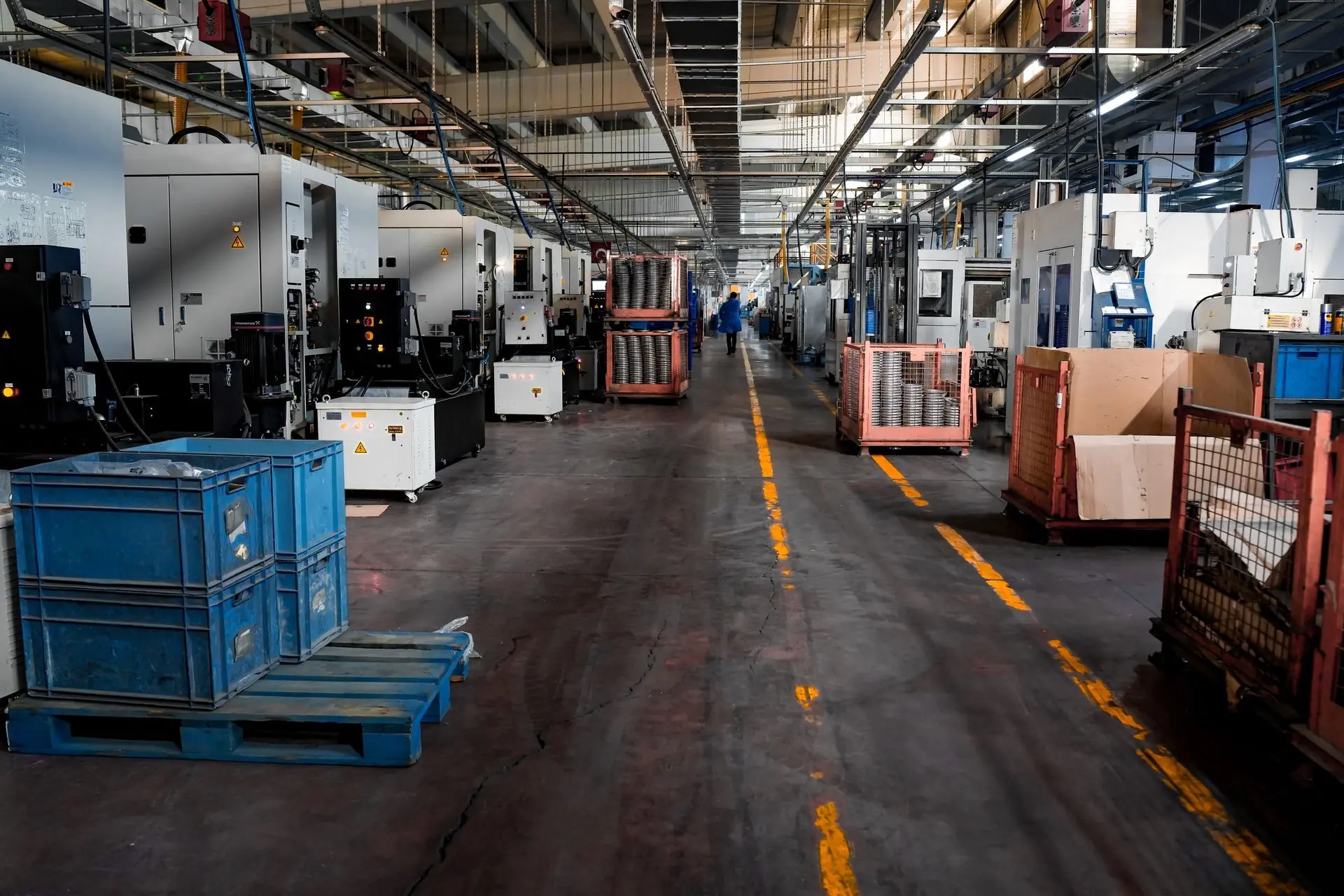
The client, a multi-site industrial manufacturer with roughly $180 million in annual revenue, had spent three straight quarters watching gross margin erode by nearly a point each period. Leadership attributed it to input costs. The real story, uncovered in week one of Nova Capital’s diagnostic, was a pricing structure frozen since 2021, a debt-service coverage ratio that had slipped below the 1.10x threshold in its senior facility, and a 13-week cash position with no forward visibility past day nine.
The company’s trajectory mirrored a pattern showing up across the middle market. Alvarez & Marsal’s 2025 Annual Turnaround Survey, drawing on more than 180 turnaround professionals, describes a landscape where cautious optimism sits alongside persistent inflation, debt overhang, and sector-specific pressure — exactly the combination that had quietly compounded against this client for two years before anyone called it a crisis.
Distress rarely announces itself with a single bad quarter. It shows up as a series of decisions nobody wanted to make out loud — delaying a vendor payment, deferring a hire, quoting a job too low to keep the plant running. By the time a covenant breach lands on the table, the business has already been in survival mode for months. Our job in week one wasn't strategy. It was triage.
Turnaround & Restructuring Advisory

Nova Capital’s diagnostic team isolated three structural drivers behind the cash crisis: legacy pricing on nearly 40 percent of the client’s largest accounts that hadn’t been repriced against rising input costs, SG&A that had grown 22 percent over three years without a corresponding revenue increase, and a finance function with no rolling cash forecast — decisions were being made on trailing bank balances, not forward liquidity. None of these were fatal in isolation. Together, under lender pressure, they were.
The findings reframed the engagement from “cost-cutting exercise” to “liquidity-first stabilization.” That distinction matters more than it sounds: Deloitte’s 2026 Turnaround and Restructuring Outlook reports that roughly 12 percent of borrowers are now operating with negative cash flow and 13 percent have interest coverage below 1.0x, up sharply from 7 to 8 percent a year earlier — evidence that operating underperformance, not just maturity-wall refinancing risk, is now the dominant driver of restructuring activity industry-wide.
Key improvements included:
Within two weeks, the diagnostic had done what three months of internal task forces hadn’t: it gave leadership a single, shared, numbers-based picture of exactly how much runway remained and precisely where it was leaking.
That clarity became the foundation for the next phase — not a generic cost-reduction program, but a sequenced 100-day stabilization plan built specifically around the three root causes the diagnostic had isolated.
Nova Capital structured the engagement in three overlapping phases — stabilize, restructure, rebuild — compressed into a 100-day execution window designed to hit the client’s next lender review with demonstrable progress rather than another explanation.

The first 30 days focused exclusively on liquidity: converting the diagnostic’s cash forecast into a weekly discipline reviewed with the CFO every Monday, renegotiating three vendor payment terms, and pausing all discretionary spend above $25,000 pending individual sign-off. Critically, this wasn’t a blanket freeze. McKinsey’s research on maintaining a long-term view during turnarounds identifies talent investment as the single largest attribute of a successful turnaround and warns that indiscriminate spending freezes can inflict long-term damage far exceeding their short-term savings — a principle Nova Capital applied by evaluating every cut on a net-present-value basis rather than an across-the-board percentage.
SG&A restructuring targeted the 22 percent overhead growth directly: two underperforming regional back-office functions were consolidated into a shared-services model, a management layer was eliminated at the plant level, and headcount was reduced by 8 percent — concentrated almost entirely in roles duplicated across sites. Production supervisors, quality engineers, and the sales team carrying the repriced accounts were explicitly protected, because the recovery plan depended on their retention, not their replacement.

In parallel, Nova Capital led direct negotiations with the senior lender: a covenant reset tied to the new 13-week forecast, a 90-day amendment period in exchange for monthly reporting, and release of a portion of restricted cash to fund the repricing rollout. This sequencing — stabilize operations before renegotiating debt — reflects the five-phase framework KPMG outlines in its guide to turnaround strategies to improve business performance, which places liquidity enhancement and stakeholder engagement ahead of longer-horizon structural change.
Lenders don't extend goodwill because a company says it has a plan. They extend it because the plan comes with a forecast they can underwrite and a reporting cadence that proves the forecast is holding. Every negotiation we ran in this engagement was backed by numbers the client's own team had learned to produce and trust.
Corporate Recovery Practice
A weekly turnaround steering committee — CEO, CFO, plant operations lead, and the Nova Capital engagement team — tracked every initiative against a single scorecard of cash, margin, and covenant metrics. This governance structure did more than enforce accountability; it gave the leadership team a repeatable operating rhythm they kept using long after the formal 100-day window closed.
By day 126, the client had crossed from cash-flow negative to sustainably cash-flow positive — a milestone the lender’s credit committee flagged as the turning point in its risk rating. Twelve months in, the numbers told a story the company could take into its next capital conversation from a position of strength rather than survival.
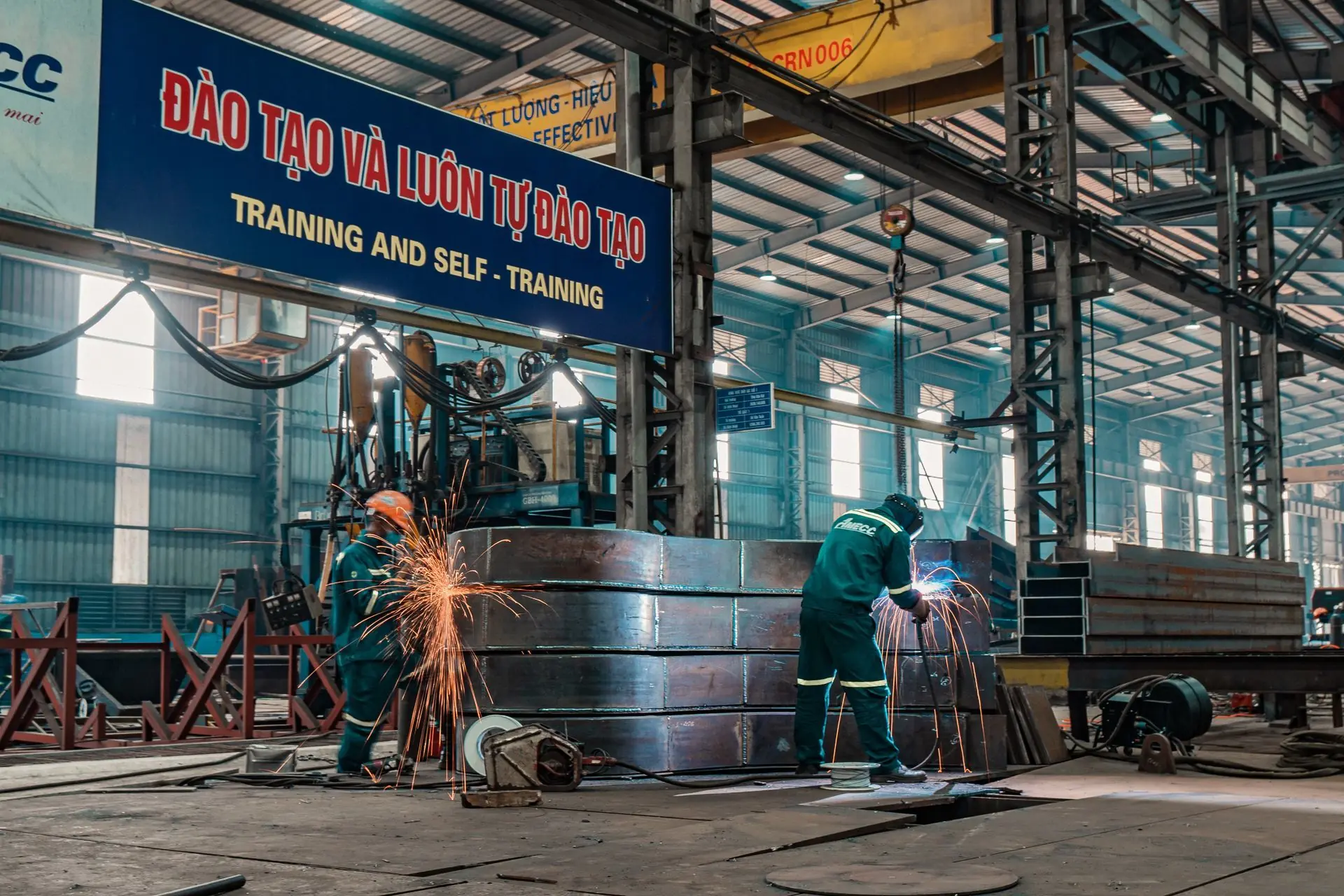
EBITDA margin improved 34 percent over the trailing twelve months, driven roughly evenly by the pricing correction and the SG&A restructuring. The covenant that had been breached at engagement start was met with headroom to spare by month five, and stayed there. This kind of documented, metric-driven recovery is precisely what the Turnaround Management Association points to as the difference between a company that merely survives a liquidity event and one that converts it into a durable operating improvement.
Of the $21.6 million in annualized savings identified during the engagement, $17.9 million had been fully executed and verified by the twelve-month mark, with the remainder phased into the following fiscal year to avoid disrupting production capacity during peak season. Unlike a one-time cost purge, the majority of these savings were structural — renegotiated vendor terms, consolidated back-office functions, and corrected pricing — meaning they didn’t erode once the crisis pressure lifted.

Working capital days improved by 19 days through tighter receivables discipline and renegotiated supplier terms, freeing roughly $6.1 million in trapped cash. Combined with the EBITDA recovery, this gave the company enough covenant headroom that it refinanced its senior facility on improved terms eight months after the engagement closed — a debt conversation it entered as a negotiating party, not a distressed borrower.
Perhaps the most durable outcome wasn’t financial. The weekly cash forecasting discipline, the steering-committee governance model, and the NPV-based framework for evaluating cost decisions all remained in place well after Nova Capital’s formal engagement ended — evidence that the turnaround had rebuilt organizational capability, not just repaired a balance sheet.
This engagement is a reminder of what distinguishes a genuine turnaround from a temporary reprieve: the fixes have to outlast the crisis that forced them. Deloitte’s 2026 outlook notes that restructuring activity is expected to hold steady or increase modestly through 2026, driven increasingly by operating underperformance rather than debt-maturity events alone — which means the companies that build real forecasting discipline, disciplined cost governance, and lender trust during a downturn aren’t just recovering. They’re positioning themselves to outcompete peers who treat their next distress signal as a one-time fire drill instead of a structural warning.
The future of financial services is being shaped by digital innovation, evolving markets, and new forms of value. We help financial institutions, fintechs, and digital asset businesses turn change into opportunity and build for sustainable growth.
Ideas that drive better

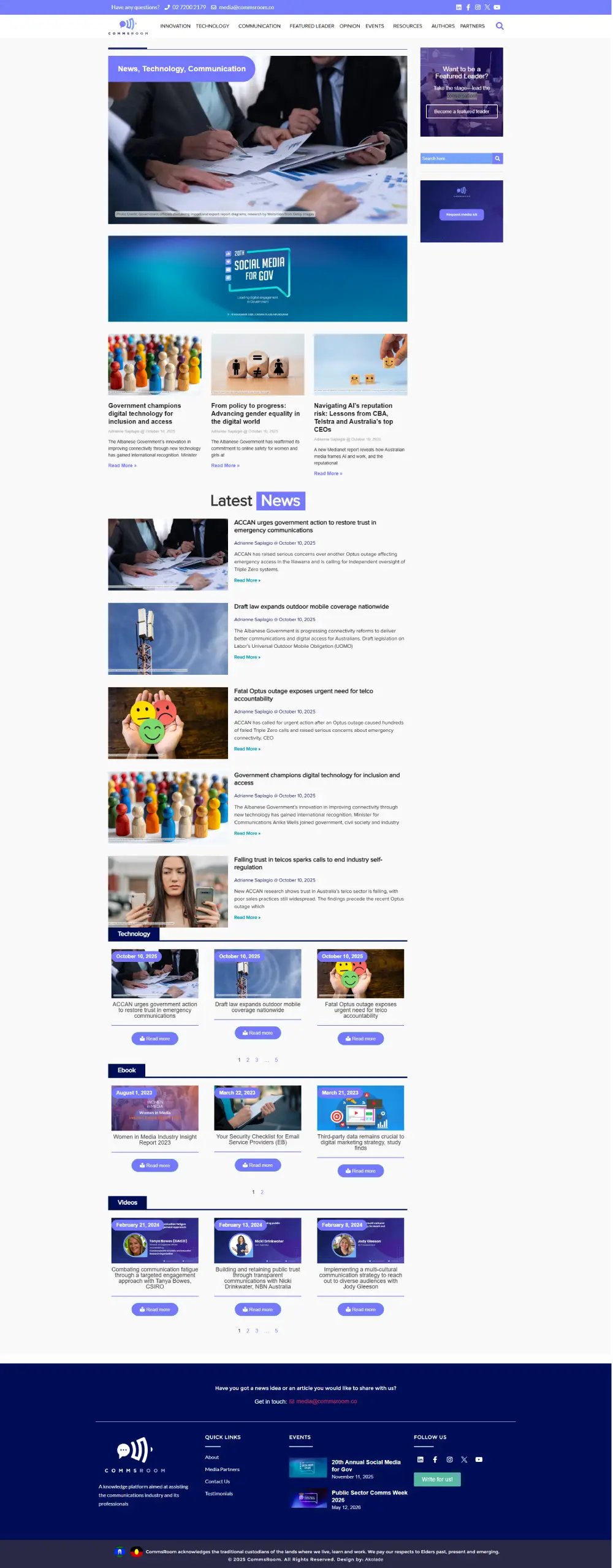
Comms Room, a leading communications newsletter website, wanted a modernized platform with a custom post type (CPT) setup to manage their daily articles and categorized content efficiently.
We developed a fully dynamic, user-friendly website that automates content organization, enhances navigation between topics, and supports high-volume publishing. The result is a sleek, modern platform that streamlines content management while elevating the reader experience — keeping Comms Room’s news delivery fast, engaging, and future-ready.