
Repetitive, manual processes drain time and create errors — and the pattern is widespread: 73% of IT leaders report that automation saves roughly half their team’s time. This case study explores how we mapped workflows and deployed automation tools across finance, operations, and customer service. The result: 50% fewer manual hours, fewer errors, and teams freed to focus on high-value work and innovation.
50% reduction in manual workload, improved accuracy, faster process turnaround
Businesses today face growing pressure to operate faster, reduce costs, and deliver consistent experiences while managing increasingly complex processes. Yet many organizations continue to rely on disconnected systems, spreadsheets, emails, and repetitive manual tasks that slow decision-making and create unnecessary operational risk — even as roughly 60% of businesses have already automated at least one workflow, with 80% planning to increase that investment.
For organizations experiencing rapid growth, the challenge is rarely a lack of technology. The greater challenge is connecting technology, people, and processes in a way that creates measurable business value.
One growing organization faced this exact challenge. As the business expanded, critical workflows became increasingly dependent on manual intervention. Teams were spending valuable time processing requests, moving information between systems, following up on approvals, and preparing reports that could have been generated automatically.
The result was a fragmented operating environment where simple tasks required multiple handoffs, while management lacked a consistent real-time view of operational performance.

The transformation began by mapping the organization’s most critical business processes from end to end.
Rather than automating individual tasks in isolation, the team identified where information entered the organization, how decisions were made, where approvals occurred, and where employees were required to manually transfer information between systems.
This revealed several opportunities for automation across data processing, workflow approvals, notifications, reporting, and system integration.
The objective was not simply to remove manual work.
It was to create a more connected operating model where routine activities could happen automatically, employees could focus on higher-value decisions, and leadership could gain greater visibility into business performance.
“Automation should not simply make processes faster. It should make the entire organization easier to operate, easier to manage, and easier to scale.”
Business Transformation & Process Automation
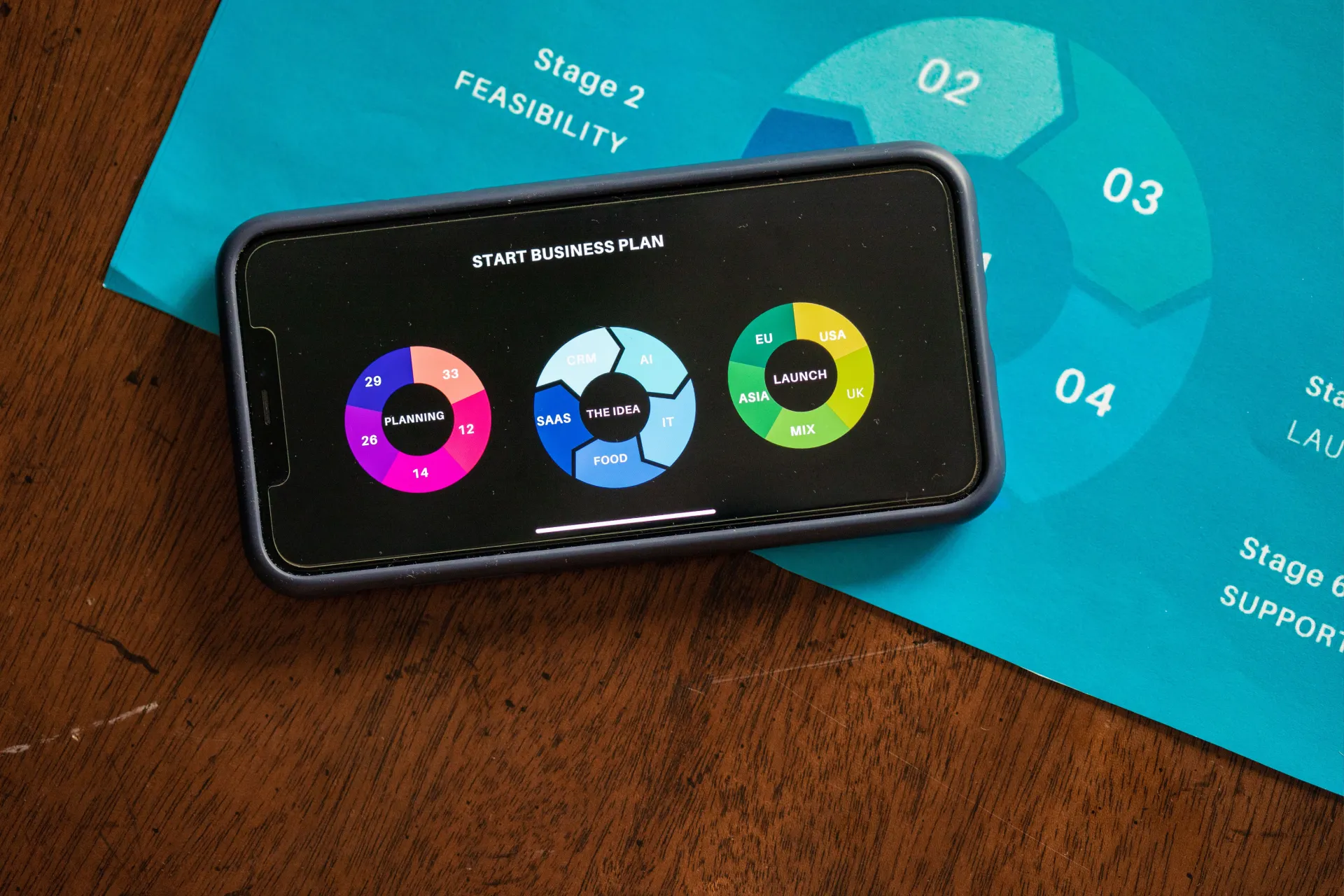
With the priority processes identified, the organization developed an automation framework connecting its existing business systems and workflows.
Incoming information was automatically captured and routed to the appropriate workflow. Approval processes were standardized, notifications were triggered automatically, and completed activities were recorded for reporting and analysis.
This approach reduced the number of manual handoffs while creating a more consistent process across departments.
The transformation also established clearer accountability. Instead of relying on employees to remember the next step in a process, automated workflows could determine what action needed to happen next and who was responsible for it.
The value of the transformation extended beyond operational efficiency.
Once processes became digitally connected, the organization could begin collecting more reliable operational data. Leaders gained better visibility into bottlenecks, processing times, workload distribution, and workflow performance.
This created a foundation for continuous improvement.
Rather than waiting for monthly reports to identify operational issues, management could use process data to identify emerging problems and make faster decisions.
Key improvements included:
Most importantly, automation allowed employees to spend less time managing processes and more time solving problems, serving customers, and supporting strategic initiatives.
Business process automation is most powerful when it becomes part of a broader transformation strategy.
For this organization, automation was not treated as a technology project. It became an opportunity to redesign how work moved through the business.
By combining process redesign, workflow automation, system integration, and data visibility, the organization created a more agile operating environment—one capable of adapting as the business continues to grow.
The result was a shift from managing manual processes to managing intelligent workflows.
And that shift created something more valuable than efficiency alone: a stronger operational foundation for sustainable growth.Business process automation is most powerful when it becomes part of a broader transformation strategy.
For this organization, automation was not treated as a technology project. It became an opportunity to redesign how work moved through the business.
By combining process redesign, workflow automation, system integration, and data visibility, the organization created a more agile operating environment—one capable of adapting as the business continues to grow.
The result was a shift from managing manual processes to managing intelligent workflows.
And that shift created something more valuable than efficiency alone: a stronger operational foundation for sustainable growth.
The organization began by taking a comprehensive view of how work moved across the business. Rather than automating individual tasks independently, the team mapped critical processes from initiation through completion to identify repetitive activities, unnecessary handoffs, approval bottlenecks, and disconnected systems.
This process revealed several areas where automation could create immediate operational value, including data processing, approval workflows, notifications, reporting, and information exchange between business applications.
The goal was to create a connected workflow in which information could move automatically between systems and teams, while employees remained focused on decisions that required human judgment — the kind of framework-level investment that Forrester found delivers a 248% three-year ROI when automation is implemented as a connected system rather than isolated fixes.

The first step was to redesign the underlying workflows.
Manual requests were structured into standardized digital processes. Information could be captured once and automatically routed to the appropriate team or system. Approval requirements were clearly defined, while automated notifications helped ensure that tasks did not remain idle waiting for follow-up.
By replacing fragmented handoffs with connected workflows, the organization created a more predictable way of executing everyday operations.
Automation was then extended across the organization’s existing technology environment.
Rather than replacing every system, the approach focused on connecting the tools already being used. Data could move between applications without requiring employees to repeatedly copy, enter, or reconcile information.
This created a more integrated operating environment while reducing the friction created by disconnected technology.

The final component was creating greater visibility into process performance.
Automated workflows generated consistent operational data that could be used to monitor activity, identify bottlenecks, and understand where processes were performing well or requiring improvement.
This gave leadership a clearer view of how work was moving through the organization and created a foundation for continuous process optimization.
“The objective was not to automate everything. It was to automate the right things, connect the right systems, and give people more time to focus on work that creates value.”
Business Transformation & Process Automation
The resulting solution went beyond automating repetitive activities.
It established a scalable framework for continuously identifying, redesigning, and automating business processes as the organization evolved.
With the right processes, systems, and data connected, automation became an ongoing business capability rather than a one-time technology initiative.
The transformation changed how everyday work was performed across the organization.
Processes that previously depended on manual data entry, email exchanges, follow-ups, and multiple handoffs could now move through standardized digital workflows. This reduced operational friction while creating greater consistency across teams.
The impact extended beyond simply completing tasks faster.
By connecting processes and systems, the organization gained a stronger operational foundation for growth.

Automation reduced the amount of time employees spent performing repetitive administrative activities.
Routine tasks could be initiated, routed, tracked, and completed with significantly less manual intervention. Employees were able to redirect more of their attention toward customer needs, problem-solving, analysis, and higher-value business activities.
Standardized workflows reduced the variability that often occurs when processes depend heavily on individual employees.
Information followed defined paths, required approvals were easier to track, and routine activities were performed consistently.
This helped reduce errors associated with manual data transfer and fragmented processes — consistent with broader findings that half of organizations report automation eliminates or significantly reduces human error.
Perhaps the most important impact was the organization’s ability to grow without allowing administrative complexity to grow at the same rate.
As transaction volumes and operational demands increased, automated workflows provided additional capacity without requiring every process to depend on additional manual effort.
The organization moved toward an operating model designed not only for today’s requirements, but for future growth.
The transformation demonstrated that business process automation is more than a cost-reduction exercise.
When automation is combined with process redesign, system integration, and better operational visibility, it can fundamentally change how an organization works.
The result is an operating environment that is faster, more consistent, more transparent, and easier to scale.
For the organization, automation became a foundation for continuous improvement—allowing teams to spend less time managing processes and more time creating value.
The future of financial services is being shaped by digital innovation, evolving markets, and new forms of value. We help financial institutions, fintechs, and digital asset businesses turn change into opportunity and build for sustainable growth.
Ideas that drive better

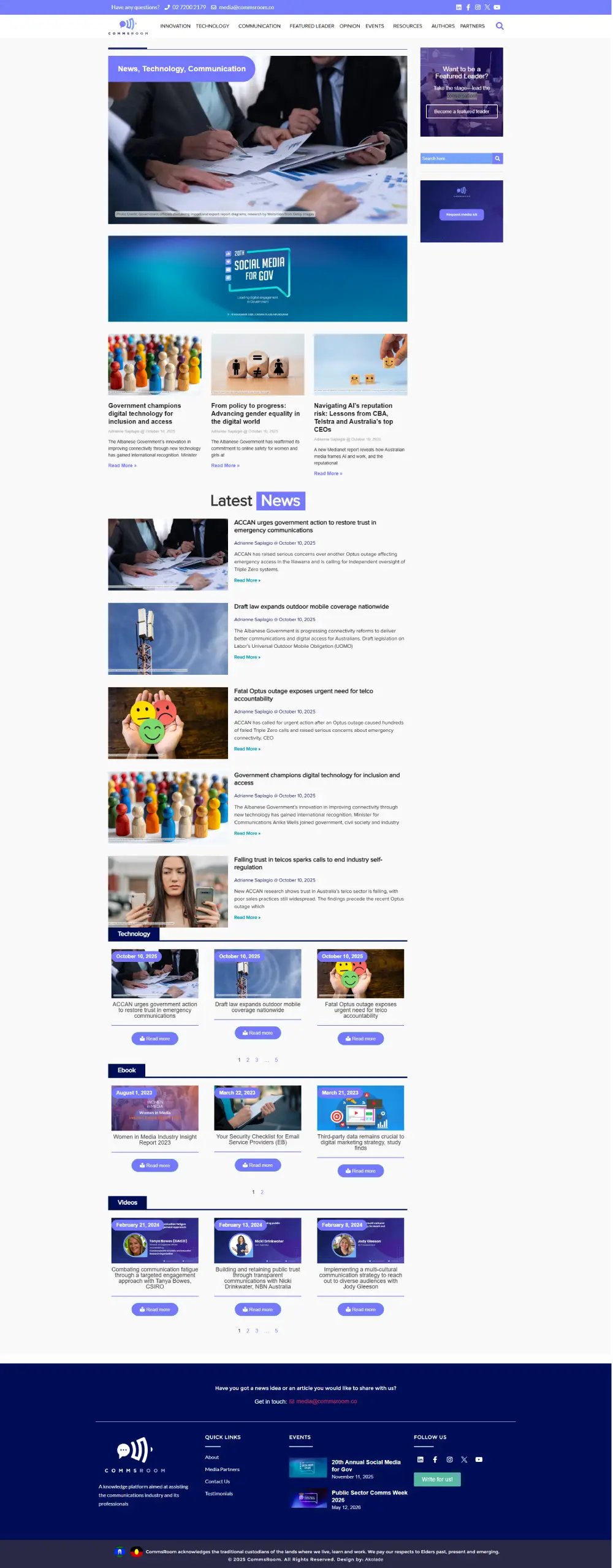
Comms Room, a leading communications newsletter website, wanted a modernized platform with a custom post type (CPT) setup to manage their daily articles and categorized content efficiently.
We developed a fully dynamic, user-friendly website that automates content organization, enhances navigation between topics, and supports high-volume publishing. The result is a sleek, modern platform that streamlines content management while elevating the reader experience — keeping Comms Room’s news delivery fast, engaging, and future-ready.