
AI adoption in professional services has moved past the pilot stage: McKinsey’s 2025 State of AI research found that 88% of organizations now use AI regularly in at least one business function, yet fewer than a third have scaled it beyond isolated experiments. For a multi-practice consulting and advisory firm built on senior-led, manual delivery, that gap between using AI and running on AI had become a growth ceiling. Utilization was capped by how many hours partners and senior consultants could personally push through the pipeline, realization was leaking through untracked time, and every new client mandate meant another linear hit to headcount.
Working with Nova Capital Consulting, the firm cut time spent on manual research, drafting, and document review by 42%, lifted engagement capacity per fee-earner by 3.4x without adding headcount, and moved from a single pilot practice group to firm-wide AI-augmented delivery in 90 days.
The firm’s core practice areas ran on a model that had barely changed in a decade: senior consultants and partners personally reviewed every research brief, drafted every client deliverable from a blank page, and signed off on every hour before it reached an invoice. Growth meant hiring, not leverage, because the knowledge and judgment that made the firm valuable lived almost entirely in the heads of a small group of fee-earners rather than in any reusable system.

Individual consultants had already started experimenting with generic AI tools on their own, with no firm-wide strategy, governance, or integration into how work actually moved through engagements. Thomson Reuters found only 22% of professional services organizations have a defined AI strategy, and that firms with one are twice as likely to see AI-driven revenue growth as those treating it as a side experiment. Shadow use was creating inconsistent quality and real confidentiality risk, without moving a single billable metric.
Every fee-earner using AI on their own laptop is not an AI strategy. It's an unmanaged risk with a productivity rumor attached.
AI & Digital Transformation

Junior staff spent the bulk of billable hours on tasks with no institutional memory attached: rebuilding market and regulatory research from scratch, reformatting prior deliverables into new templates, and chasing down precedent language buried in old engagement files. Thomson Reuters’ 2025 Future of Professionals research found professionals expect AI to reclaim a growing share of exactly this kind of repeatable, judgment-light work, yet the firm had no system to capture and reuse what its own consultants already knew.
Time entries were reconstructed from memory at the end of the week, engagement codes were misapplied, and write-offs were discovered only at month-end reconciliation. Partners could see utilization trending down but had no reliable way to isolate whether the cause was demand, delivery speed, or simple under-billing.
Key improvements included:
None of these problems traced back to a lack of ambition or talent. The constraint was structural: growth depended on hours nobody could clone.
What the firm needed wasn’t a tool rollout. It needed a delivery model where research quality, drafting speed, and billing accuracy no longer scaled one-to-one with headcount.
That reframe — from AI as an individual productivity trick to AI as firm infrastructure — became the starting point for the engagement with Nova Capital Consulting.
Nova Capital Consulting’s engagement began with a delivery audit, not a technology audit: mapping every recurring task across the firm’s three core practice areas by billable hours consumed, rework rate, and reuse potential. The goal was to identify where AI-augmented workflows would change the firm’s unit economics fastest, rather than deploying tools wherever adoption felt easiest.
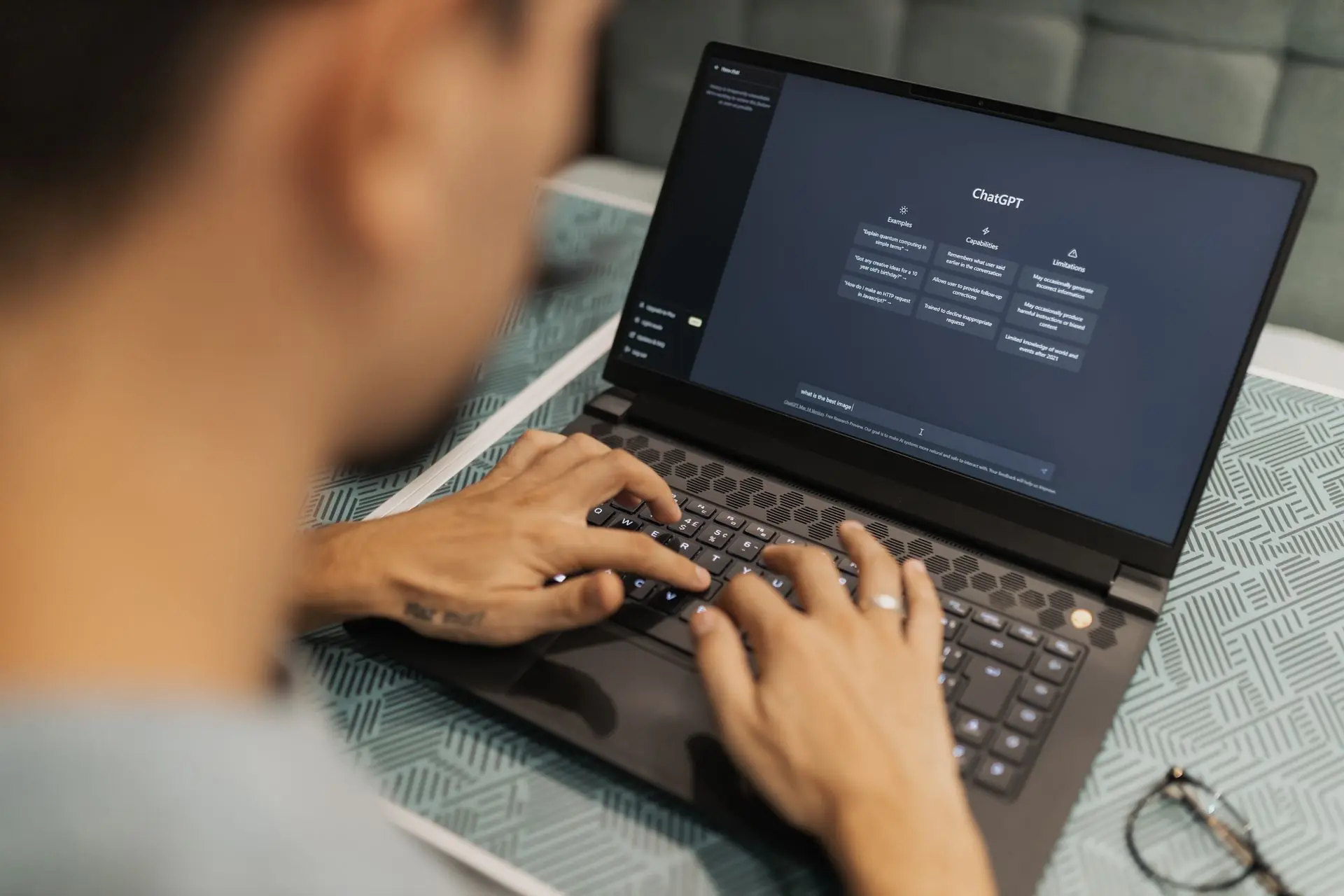
The first build was a research copilot trained on the firm’s own engagement archive, regulatory filings, and client deliverables, layered with retrieval controls so consultants could query years of prior work in natural language instead of re-researching it from zero. This mirrors what McKinsey’s 2025 State of AI research identifies as the dividing line between firms that see real returns and the roughly two-thirds still stuck in disconnected pilots: value comes from embedding AI into a specific, high-volume workflow, not from handing out general-purpose tool access.
For recurring deliverable types, the team built AI-assisted drafting templates that produced structured first drafts from intake data and the research copilot’s output, freeing partners to apply judgment rather than reformat prior documents. Consistent with CPA.com’s 2025 AI in Accounting Report, every drafting workflow was built human-in-the-loop by design, with a mandatory senior review gate before anything reached a client.
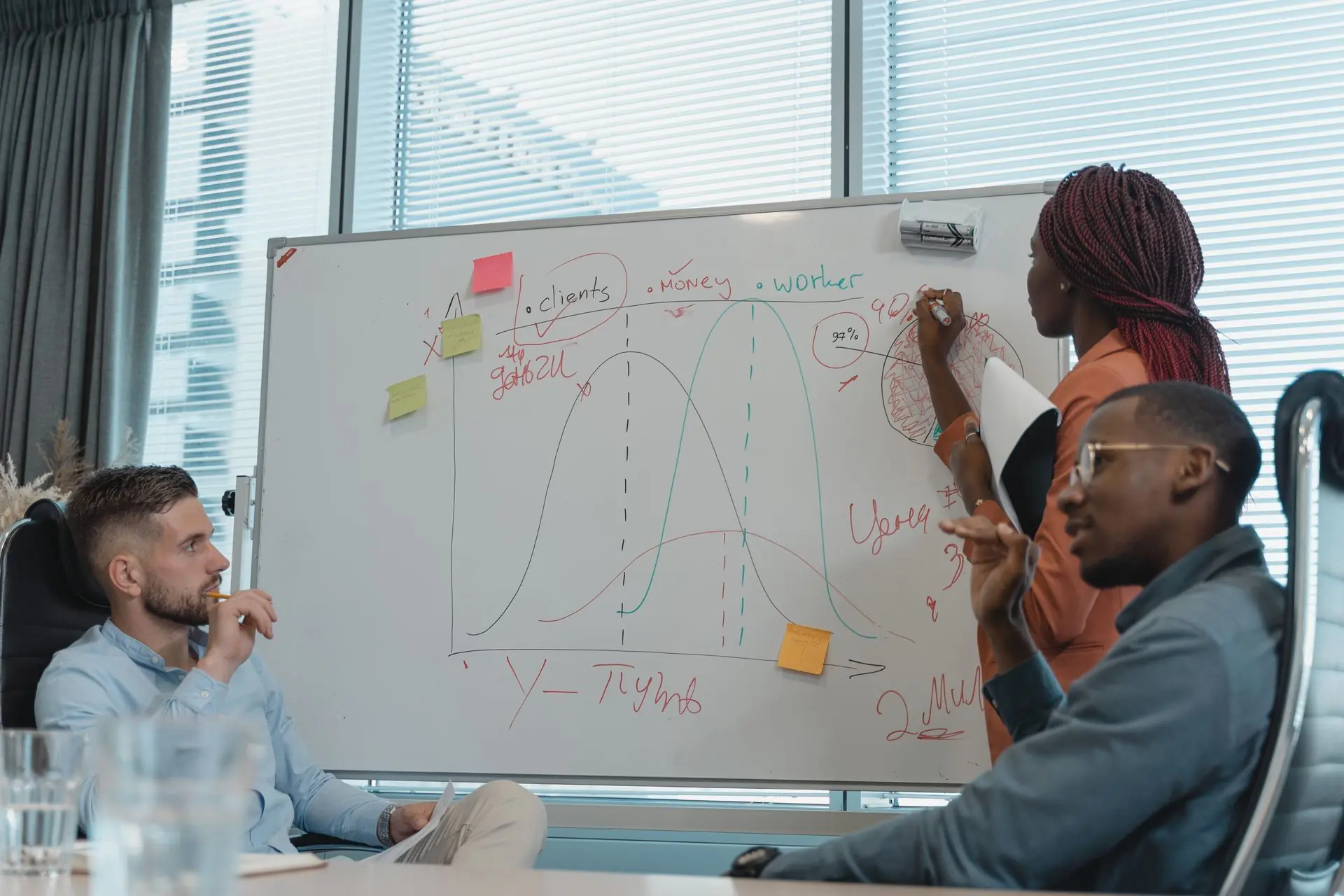
Time-capture automation tied to calendar activity, document edits, and email threads generated draft time entries in real time instead of end-of-week reconstruction, while an AI review layer flagged mismatched engagement codes and unbilled activity before invoices went out. Billing leakage stopped being a month-end surprise and became a weekly, correctable metric.
The firms that win with AI aren't the ones with the most tools. They're the ones that turn one workflow at a time into infrastructure the whole firm can stand on.
Professional Services Advisory
Because compensation and career progression were historically tied to billable hours, faster drafting and research could easily have looked like a threat rather than a benefit. Nova Capital Consulting redesigned utilization targets and review criteria alongside the technical rollout, ran role-specific training delivered through partners rather than IT, and phased the rollout through one practice group first so skeptics could see peer results before firm-wide adoption was asked of them.
Within the pilot practice group, manual research and first-draft turnaround time fell fast enough that the firm expanded the model to its other two practice areas ahead of the original schedule. The results held as they scaled, which was the real test.

Across the three practice groups, time spent on manual research, drafting, and document review dropped 42%, driven primarily by the research copilot removing redundant lookup work and the drafting templates removing blank-page starts. Consultants redirected the reclaimed time toward client-facing advisory work and business development rather than absorbing it as slack.
Engagement capacity per fee-earner rose 3.4x, measured as client mandates actively in delivery per consultant, without a corresponding increase in headcount. Partners could take on new mandates against existing capacity instead of defaulting to a hiring decision every time the pipeline grew.

Automated time-capture and the billing-integrity review layer closed a meaningful share of the firm’s previously invisible write-off leakage, and realization became a live, weekly-tracked metric rather than a month-end reconciliation exercise. Partners now catch under-billing before it reaches an invoice instead of writing it off after the fact.
The governance model, review-gate process, and phased rollout playbook built during the engagement now function as the firm’s standard method for evaluating and deploying every new AI use case, rather than a one-off transformation project that ends when the consultants leave.
The firms treating AI as delivery infrastructure rather than a productivity add-on are the ones positioned to compound the advantage: Thomson Reuters projects professionals could reclaim as much as 12 hours a week through AI by 2029, roughly double what firms are capturing today. For Nova Capital Consulting’s clients, the opportunity isn’t a single efficiency project — it’s building the operating model now that turns each additional year of AI capability into compounding capacity, without compounding headcount.
The future of financial services is being shaped by digital innovation, evolving markets, and new forms of value. We help financial institutions, fintechs, and digital asset businesses turn change into opportunity and build for sustainable growth.
Ideas that drive better

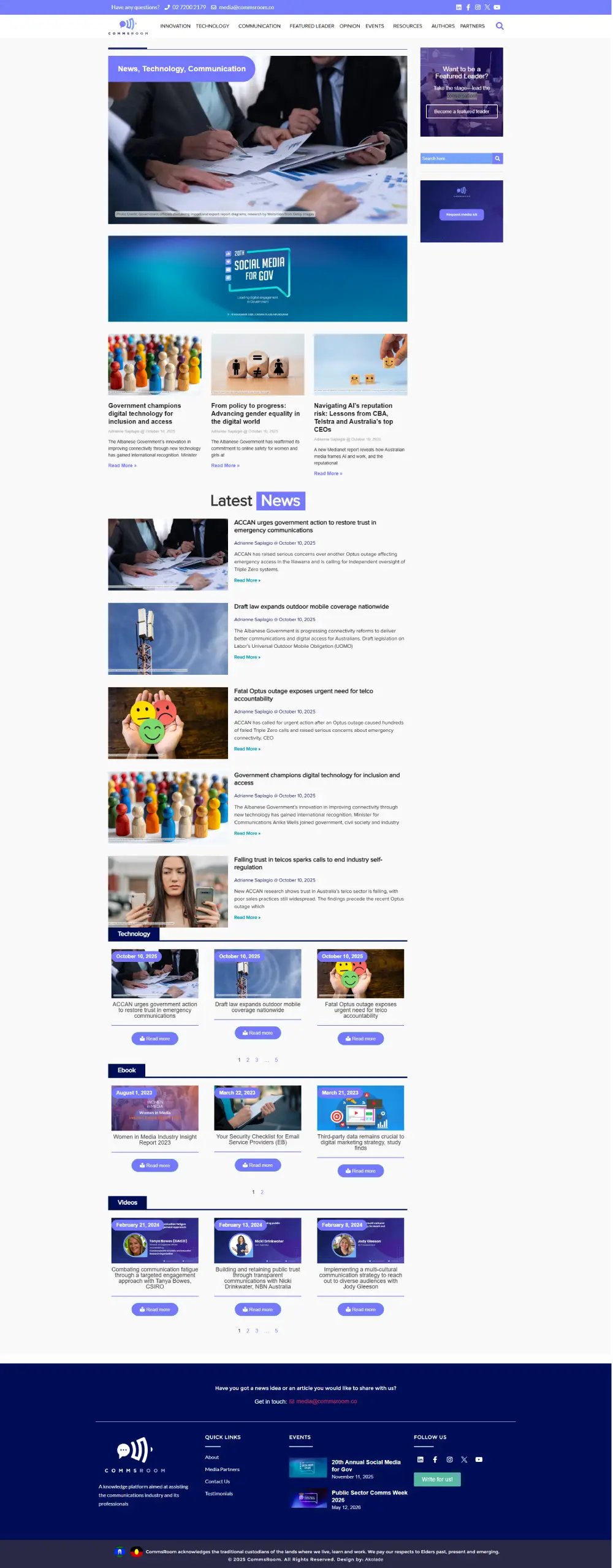
Comms Room, a leading communications newsletter website, wanted a modernized platform with a custom post type (CPT) setup to manage their daily articles and categorized content efficiently.
We developed a fully dynamic, user-friendly website that automates content organization, enhances navigation between topics, and supports high-volume publishing. The result is a sleek, modern platform that streamlines content management while elevating the reader experience — keeping Comms Room’s news delivery fast, engaging, and future-ready.